
Brücke der Freundschaft - Schulverein
Verein zur Förderung der Projekte des „Karma Leksheyling Public Educational Trust“ in Kathmandu
  • Anfang
  • Blog mit Neuigkeiten
  • Aktuelles
  • Unsere Unterstützung
  • Gebetsheft
  • Satzung
  • Chöje Lama Phuntsok
    • Belehrungen von Chöje Lama Phuntsok
  • Die Schule
  • Die Nonnen der KLL-Schule
  • Spenden
  • Mitglied werden
  • Aufgaben
  • Ziele
  • Lageplan der Häuser
  • Bilder vom aktuellen Geschehen
  • Videos vom Kloster
  • Rundbriefe
  • Downloads
  • Impressum und Datenschutzerklärung
  • Links
  • Bildergalerie
  • Kontakt
  1. Aktuelle Seite:  
  2. Startseite
  3. Uncategorised

Uncategorised

Details
Zugriffe: 1218

Becoming and Being a Bodhisattva

lamaphuntsokmituebersetzer

Venerable Chöje Lama Phuntsok

Teachings presented during the Manjushri Retreat at

Karma Chang Chub Choephel Ling, Heidelberg, in October 2009.

"Until I awaken, I take refuge in
The Buddha, the Dharma, and the Supreme Assembly.
Through the goodness of generosity and other virtues
May I awaken fully in order to help all beings."


"Namo Guru Manjushri Ye"

Before reciting The Short Dorje Chang Lineage Prayer together, let me say many thanks to Lama Dorothea for offering Dharma continuity at Karma Chang Chub Choephel Ling and let me greet all of you who have come here kindly.

During this seminar, we will be looking at the activities of Bodhisattvas, particularly of Noble Manjushri, -Jam-dpäl-dbyangsshes-rab, -wisdom-awareness.' in Tibetan. We have statues and paintings of Bodhisattva Manjushri. They are his outer representations. His inner meaning is that he is the personification of

Wisdom-Awareness, shes-rab

Whether we are engaged in worldly activities or are treading the path of Dharma, we can't have enough wisdom-awareness. The more worldly knowledge and spiritual wisdom we develop, the more positive results and beneficial qualities will arise in us. Shes-rab isn't restricted to Dharma studies and activities but is important in all walks of life.

Looking at people, everyone has a different degree of intelligence, another translation of shes-rab. Some people are very intelligent and wise, some aren't very smart and intelligent, while others aren't all too bright and have no wisdom. So, everybody is individual and different.

The opposite of intelligence is ignorance, ma-rig-pa, and the opposite of ignorance is shes-rab. Ignorance means -not-knowing.' When we have eliminated not-knowing, then we know and thus have knowledge, i.e., shes-rab. There are innumerable things to know and we can never learn everything that can be known.

We have to develop and have a tool, i.e., a method, in order to be able to even approach all the things that we need to know, and our tool is shes-rab, -intelligence.' In school, children develop a method to sharpen their intelligence, which enables them to win knowledge. They start by learning the alphabet. Through their years in school, children continue learning more and more from teachers and step-by-step attain knowledge of what they need to know. This is how we, too, develop shes-rab. In order to increase our knowledge, we not only need qualified teachers, but we also need to be diligent, brtsong--grüs.

Just as everybody is different, teachers are also different. Some can convey knowledge quite well, while others can't. If a teacher doesn't have a good understanding of the subject that he or she is trying to teach, he or she won't be able to teach satisfactorily. So, teachers need to have a good understanding of what they are trying to teach others. Furthermore, they need to have experience in order to be able to teach well. This is all the more so for spiritual teachers.

There are two categories of knowledge. They are: -jig-rten-shes-rab, -worldly knowledge,' and mthar-thug-gi-shes-rab,mThar-thug-gi-shes-rab is so subtle that it cannot be taught by a teacher who is merely specialized in worldly topics. Ultimate knowledge can only be attained by entering and treading the spiritual path and by receiving instructions from a qualified spiritual teacher. -transcendent, ultimate wisdom-awareness.' Having worldly knowledge depends upon having good teachers and upon being diligent; it can be attained easily.

There are three levels of ultimate knowledge that should be known, that should be integrated in life, and that should be practiced. They are: the view, the meditation, and the action. Firstly, by means of their intelligence and in reliance on the instructions they have received from a qualified spiritual teacher, devotees who have embarked on the path of Dharma need to exert effort and attain knowledge of the view. Secondly, they need to experience the teachings by meditating what they learned. Generally, meditation means -abiding in mental absorption.' But, it is necessary to have lta-ba'i-shes-pa, -knowledge of the view,' in order to be able to abide in the calm of the mind. Jamgon Kongtrul Lodrö Thaye tells us that a meditator who hasn't learned and doesn't know the view is like a blind person. This means that it's necessary to learn the view before meditating. Learning the view entails shes-rab.

When speaking about the view, it is necessary to speak about prajnaparamita, the Sanskrit term that was translated into Tibetan as shes-rab-kyi-pha-rol-tu-phyin-pa, -transcendent knowledge.' The Tibetan term is a description of the Mahayana aspect of Lord Buddha's teachings on emptiness, which is the lack of inherent, substantial existence of all things.

There are various instructions in Buddhism to understand emptiness. It is often said that the ultimate truth is the truth of emptiness, but wisdom isn't emptiness. Based on the Madhyamika Tradition of Buddhism, we learn to understand the ultimate truth of shes-rab-kyi-pha-rol-tu-phyin-pa from the vantage point of the Shentong Tradition of Mahamudra and learn that emptiness doesn't mean nothing. So, emptiness and wisdom refer to our own mind, sems. Isn't it so? Where else can transcendent knowledge be other than in our own mind? We are ignorant as long as we don't know this, are deluded because of this ignorance, and therefore wish to unravel and overcome our delusiveness. To do this, we need to increase our shes-rab, our -wisdom-awareness.'

When we examine carefully, we see that our mind isn't nothing, but that it is present. What is the sign for saying that we have a mind and that it is present? The sign is that sometimes we experience suffering and sometimes we experience happiness, i.e., due to having a mind, we have a great variety of pleasant and unpleasant feelings. If our mind were nothing and merely emptiness, we couldn't experience suffering and happiness. When we look at our mind, we see that it has qualities as well as shortcomings and defects. Because of our defects, skyön, we experience suffering in our mind; and because of our qualities, yön-tän, we experience happiness and well-being in our mind. Most people and most living beings experience approximately 95% of their lives in suffering and pain. Those 95% are caused by their mind's shortcomings and defects.

As long as we are not aware of our errors and defects and don't even know what having them implies, we remain in the darkness of ignorance. Qualities and defects are mutually exclusive, i.e., if we have many defects, we will have less qualities and vice versa. Therefore, by increasing our qualities, our defects will automatically decrease. When we have 100% qualities, we will be skyön-gnäd-med-pa, -without the least fault or defect.'

The root of all suffering and happiness is in our own mind. Both suffering and happiness are feelings. The feeling of suffering means we aren't happy, and the feeling of happiness means we aren't suffering. Who and what experience suffering and joy? Our mind. So, we see that our mind is present and isn't nothing. Ultimate, transcendent wisdom-awareness, mthar-thug-gi-shes-rab, means fully knowing our mind.

It isn't easy to attain ultimate wisdom-awareness. So, with diligence, we engage in skilful methods, thabs, to precisely and deeply know the way our mind really is, sems-kyi-gnäs-lugs. Meditation is one skilful method, and it consists of many levels and stages. One method of meditation is the practice of Noble Manjushri, the Lord of Wisdom. Since we cannot imagine and do not know how our mind really is, we visualize Manjushri as the meaning, as the symbol, and as the sign of our mind. He is the meaning of our own mind. In order to transform our mind, we meditate dön-kyi--jam-dpäl-dbyangs, the -meaning of Manjushri,' brda'i--jam-dpäl-dbyangs, the -symbol of Manjushri,' and rtags-kyi--jam-dpäl-dbyangs, the -sign of Manjushri,' the last two being his outer representations. Our spiritual teacher will instruct us how to engage in this meditation practice correctly; it is of no use trying to meditate him without having received the instructions.

The teachings of Lord Buddha speak of attaining the two bodies of a Buddha, the Dharmakaya (-the truth body') and the two form kayas, which are the Sambhogakaya (-the enjoyment body') and the Nirmanakaya (-the manifestation body'). Manjushri's meaning is the Dharmakaya. His symbolic aspect is the Sambhogakaya, and his sign is the Nirmanakaya. When we meditate Manjushri, we concentrate on his Sambhogakaya form and imagine that we are one with him. Practicing in this way, we are cultivating the view and meditation. There are many different methods and stages to meditate Manjushri as Sambhogakaya.

At this point, it is important to remember that wisdom-awareness is the antidote of ignorance, ma-rig-pa, and eliminating ignorance is the purpose of meditation practice. We will never be able to overcome our ignorance as long as we don't have clarity of shes-rab, -wisdom-awareness.' We will continue having negative emotions (pride, jealousy, desire, greed, stupidity, miserliness, anger, hatred, etc.) and the resulting painful experiences as long as we fail to develop and don't have the clarifying quality of wisdom-awareness. As our ignorance diminishes more and more by meditating Manjushri, our negative emotions become less and less, and as a result our wisdom-awareness increases.

When meditating Manjushri, there is the subject calling to him, the object, which is Manjushri, and the action. These three aspects always need to be present while practicing.

Those persons whose mind is very obscured by ignorance and negative emotions cannot perceive a Sambhogakaya form, so Manjushri as Sambhogakaya cannot appear to them. Since we cannot perceive the Sambhogakaya form, we need much devotion and need to be confident that Manjushri is truly present when we meditate him. The veil of our ignorance becomes thinner and thinner through our devotion and then the quality of shes-rab grows more and more. When this occurs, we will be able to directly perceive Manjushri in the Sambhogakaya form. But, as beginners, we need to develop devotion, which doesn't mean he will immediately appear to us. At first, it is like drawing a flower on the surface of water. It doesn't matter how much we draw, the picture will vanish and no flower can be visible. Giving rise to devotion again and again and developing it further and further is like drawing a picture of a flower in sand. It will become visible, yet it will be swept away when a wind blows. In the same way, our negative emotions will arise again and again. So, we have to develop stable devotion, which is compared to carving a drawing into stone. Then, no matter how much water flows over the stone or how strongly a wind blows, our drawing will not vanish and cannot be destroyed. Therefore, it is extremely important to develop strong devotion, until it becomes as stable as a drawing deeply carved into a stone. We focused our attention on Noble Manjushri here, but this applies to all meditation deities.

We saw that we meditate Manjushri as the representation of wisdom-awareness, his symbol of wisdom-awareness, and his sign of wisdom-awareness. We also saw that devotion engenders wisdom. We know that he is a Bodhisattva and therefore embodies wisdom with which he eliminates the ignorance of all living beings, thus benefitting them.

Contemplating in which way Manjushri is a Bodhisattva and acknowledging that wisdom is realization of Dharmakaya, he is a Buddha. A Bodhisattva, byang-chub-sems-pa, is someone who works for the benefit of others and there are many ways to be of service and of help. In order to eliminate the ignorance of others, a Bodhisattva needs to have wisdom-awareness, which is represented by Noble Manjushri. Furthermore, in order to eliminate beings' negative emotions, such as anger and aggression, a Bodhisattva needs to have love and compassion, which is represented by Noble Chenrezig. This doesn't mean that Chenrezig has no wisdom, rather, he is the personification of love and compassion by which he eliminates beings' anger and aggression. This also doesn't mean that Manjushri lacks loving compassion, rather, he is the personification of wisdom by which he eliminates beings' ignorance. We need to have both aspects in order to overcome all our negative emotions - wisdom that cognizes emptiness and the skilful methods of loving kindness and compassion. Bodhisattvas are those persons or beings who free others from suffering. To accomplish this aim, they have the skilful methods of loving kindness and compassion as well as wisdom-awareness.

Bodhisattvas appear in a great variety of ways and needn't appear in the form of a deity like Manjushri or Chenrezig. They can appear as meditation deities, as kings, as ministers, as doctors, as tradesmen, as servants, and so forth. A Bodhisattva is someone who works for the benefit of others, which says nothing about his or her appearance. So, there are certainly Bodhisattvas among us who work for the benefit of others. We can call anybody who works for the benefit of others a Bodhisattva.

There are three characteristics of a Bodhisattva. Firstly, a Bodhisattva never grows tired or becomes weary of accomplishing the aim of liberating beings from suffering, no matter how hard it might be. Secondly, a Bodhisattva never hesitates helping other beings, no matter how many there might be. Thirdly, a Bodhisattva never stops helping others, no matter how long it might take. Whoever has these characteristics is a Bodhisattva.

Some people benefit others a lot, which isn't easy but is hard work. Whoever does hard work for the benefit of others, without thinking too much, has the quality of a Bodhisattva. For example, there is much work in a Dharma center and many problems arise. If someone isn't disturbed and doesn't become discouraged by these difficulties, he or she has the quality of a Bodhisattva, whereas becoming tired and upset isn't the way of a Bodhisattva. Not being overwhelmed by the magnitude of help that is needed but doing what is possible is having the quality of a Bodhisattva. Feeling discouraged by thinking that there is so much to do and that it will take too long is not the way of a Bodhisattva. We needn't think about what it means to be a Bodhisattva too much, because whoever has the three qualities just described is a Bodhisattva. If a king has these three qualities, then he is a Bodhisattva in the appearance of a king. If a minister has these three qualities, then he is a Bodhisattva in the appearance of a minister. If a menial worker has these three qualities, then he is a Bodhisattva doing the work he is doing. We are free to reflect whether we have these three qualities.

Some people think that they are on the path of a Bodhisattva because they engage in the meditation practice, but if they reflect the three characteristics of a Bodhisattva and think, "Oh no, that would be too hard and too much for me," then they aren't a Bodhisattva. It is very important to know the three characteristics of a Bodhisattva and to ask oneself whether one has them or not. For instance, if one is engaged in office work or if one is a servant doing menial work, one can ask oneself whether one has these three qualities or not. There is much hard work that needs to be done in communities and many people work together in small or larger groups; nobody accomplishes anything, not to speak of everything, alone. Groups usually have a boss, so a boss who has these three qualities will be a very good boss; anything he or she does will be the activity of a Bodhisattva. We can have great trust in somebody when we see that he or she acts in this way.

It is very important to know what it means to be a Bodhisattva. We should give up thinking that a Bodhisattva is an imagination or a deity that just stands around. Being a Bodhisattva takes place in our own mind. We are the ones who will become and be a Bodhisattva when we have the three described qualities. If we think about it and find that we have these qualities, then we can think of ourselves as being a Bodhisattva. If we aspire to become a Bodhisattva, we only need to develop and have these qualities. We can meditate loving kindness and compassion as long as we want, but we won't become a Bodhisattva as long as we don't have these three qualities that are the characteristics of a Bodhisattva.
Dedication

Through this goodness, may omniscience be attained

and thereby may every enemy (mental defilement) be overcome.

May beings be liberated from the ocean of samsara

that is troubled by waves of birth, old age, sickness, and death.

By this virtue may I quickly attain the state of Guru Buddha, and then

lead every being without exception to that very state!

May precious and supreme Bodhicitta that has not been generated now be so,

and may precious Bodhicitta that has already been never decline, but continuously increase!

May the life of the Glorious Lama remain steadfast and firm.

May peace and happiness fully arise for beings as limitless in number as space is vast in its extent.

Having accumulated merit and purified negativities, may I and all living beings without exception

swiftly establish the levels and grounds of Buddhahood.

jungemitrose

Photo of Venerable Chöje Lama Phuntsok teaching at Karma Lekshey Ling at Weißenthurm, Germany, in October 2009 and photo of Joshua Hehl offering a yellow rose on the inauguration day of the new center, symbolically for this article, too, courtesy of KLL. Special thanks to Michael Slaby for having recorded the teachings presented in Heidelberg and for having made the CD available to us, and sincere gratitude to Lama Dorothea Nett for having organized this most auspicious event in Heidelberg. In reliance on the fabulous simultaneous translation of Tibetan into German by Hannelore Wenderoth (seen on the photo at the top), these teachings were translated into English and arranged by Gaby Hollmann, responsible and apologizing for any mistakes. All persons and institutes mentioned here have copyright for their contribution. Lama Phuntsok's article is made available by the Dharma Download Project of Khenpo Karma Namgyal at Karma Lekshey Ling Institute in Kathmandu, by Karma Chang Chub Choephel Ling in Heidelberg, and by Karma Sherab Ling in Münster for personal use only; it may not be reproduced in any form nor be published. Munich, 2009.

Details
Zugriffe: 1288

Starting Where We Are

lamaphunstoklacht
Venerable Chöje Lama Phuntsok

Teachings presented during the Manjushri Retreat at

Karma Chang Chub Choephel Ling, Heidelberg, in October 2009.

"Until I awaken, I take refuge in
The Buddha, the Dharma, and the Supreme Assembly.
Through the goodness of generosity and other virtues
May I awaken fully in order to help all beings."


"Namo Guru Manjushri Ye"

During this seminar we are discussing what it means to be a Bodhisattva, specifically with regard to shes-rab, -wisdom-awareness,' which is represented by Noble Manjushri. As mentioned in my article, Becoming and Being a Bodhisattva, a Bodhisattva is not a deity depicted in a painting or statue. Everyone is free to become a Bodhisattva, who is characterized by three qualities that we should reflect and practice.

The Tibetan translation of the Sanskrit term Bodhisattva is byang-chub-sems-pa. The Tibetan term sems-pa means -conscious apprehension' and refers to someone who has a great mind, sems-chen-po-yöd-pa. Someone who has a great mind is courageous, i.e., he or she is someone who courageously engages in the three qualities of a Bodhisattva. The three qualities are: (1) A Bodhisattva never grows tired or becomes weary of working to accomplish the aim of liberating beings from suffering, no matter how hard it might be; (2) a Bodhisattva never hesitates helping other beings, no matter how many there are; (3) a Bodhisattva never stops helping others, no matter how long it will take. It is impossible to be a Bodhisattva without having these three qualities. Nobody can immediately become a Bodhisattva, but everyone who has this wish needs to develop these three qualities by practicing them gradually and step by step. Someone who aspires to become a Bodhisattva should know what to practice and what chang-chub-kyi-sems (-the mind of awakening,' Bodhicitta in Sanskrit) means and what it entails.

We cannot seize or grasp the mind of awakening by looking at it, because it has no color and no form. What is it then? It is an object of thought. What do we think? As it is, we seek ways to attain happiness and to avoid suffering and pain. Having chang-chub-kyi-sems means having loving kindness (the wish that others have happiness) and compassion (the wish that others to be free of suffering and pain). Mind of awakening means knowing that "Just as I want to be happy and free of suffering, all living beings want to be happy and free of suffering and pain." We will have found our mind of loving kindness and compassion when we think that others want happiness and want to be free of suffering just as we want this, too. It isn't necessary to practice having this thought, since everyone naturally has it.

There are so very many living beings that aren't able to do what is needed in order to be happy and free of suffering. We can decide to be of service to them and can give rise to the vast, heart-felt wish, "May I help all living beings attain happiness and freedom from suffering." We most likely won't be able to put our great motivation into practice, but we can start where we are and help one, or two, or ten, or maybe one hundred people be happy and free of suffering. We have loving kindness and compassion and can expand it. By seeking ever more reliable means to be of service, we can help more and more living beings in better ways. For example, we can help the sick receive medicine that they need in order to become well, or we can give food to the hungry. We can find out what we can do to help others as best as we can. When we try to put our great motivation into action by finding the means to help those in need, then that is practicing the way of a Bodhisattva. But we need to check whether the help we can give is effective, i.e., whether the medicine that we can give really helps the sick, or the food that we can give really helps those who are hungry. It's important to know what we should and shouldn't do so that we don't hurt but benefit others.

Practicing to be of service to others, we shouldn't merely concentrate on helping a few human beings only. We need to protect the environment, too, and take care that the elements aren't disturbed, rather, allowing them to remain balanced. In this way, we benefit very many living beings in Jambuling, our World.

At this time, the five elements are very disturbed and as a result they wreck havoc. Many living beings suffer when the elements aren't balanced. We thus need to be of help by protecting nature. We can start right away to help many living beings by doing our very best and as much as we possibly can to protect the water, the air, the forests, the Earth. But what can we, as individuals, do to protect the Earth? For example, we can use less paper. We use so much paper, more and more every day. Paper is made from wood that grows in the forests, so, the more paper we use, the more trees will be felled. We wouldn't only be helping mankind by using less paper, but we would also be doing so much for many other living beings. Forests are connected with earth, water, and air, and many living beings inhabit those spaces. So, minimizing our use of paper would be a big help for nature and for a huge number of living beings. If many people, maybe 100.000, started using less paper, the less trees would be felled and the forests that are a home for many living beings would be preserved and could grow. Thinking in these lines is very beneficial. It is the practice of mind training and causes our mind to become purer and purer. The purer our mind is, the more easily love and compassion will awaken in us. It is taught that we should meditate love and compassion, so it's necessary to prepare the ground for this practice by cultivating a pure and good heart.

How can we start meditating love and compassion? For instance, we can give rise to a vast state of mind the moment we wake up in the morning. After we get up, we can focus our attention for a short while on the intention of benefitting as many living beings as possible and not harming anyone the whole day. That is what we can do after we wake up and get out of bed. When we are involved with our daily obligations, sometimes we encounter good situations and often we encounter negative situations. If we experience something that isn't so good, negative emotions arise in us, like anger or scorn. In moments like that we can recall the intention we had when we got up that morning, namely, not to hurt anybody but to do as much good as possible. Our anger will almost dissolve if we bring our resolution to mind when situations like that happen. Or, if we see something that is pleasant and nice in a shop window or while strolling through a department store, we might think, "Oh, I want to own all those things." If we buy the one or other thing that we desired or thought we needed and are home again, we might find that the one thing is useful, but that many of the things that we bought are useless. Then we realize that we wasted our money. Recognizing that a negative emotion has arisen in our mind when we are greedy for things that we see, we can ask, "Of what use are those things that I think I need to own and want to buy?" In that way, we can avoid wasting so much money and resources. Noticing negative thoughts when they arise and not following after them is a great blessing.

There are two ways of thinking, positive and negative. When our positive thoughts increase, we will automatically have less negative thoughts. Therefore, when getting up in the morning, it is very good to resolve to only do what is beneficial for others and not to hurt anyone. Of course, negative thoughts will have arisen in our mind by noontime, so it's important to again and again recall our resolution. Practicing in this way enables us to weaken and eradicate our negative thoughts and emotions.

In the evening, before going to sleep, we can reflect our day. We remember that we resolved not to hurt anybody but only to be of service when we got up. We ask ourselves, "How was my day? Could I live up to my resolution?" If we notice, "Yes, I managed more or less," then we are happy. If we notice, "No, I couldn't really live up to my intention," then we regret our misbehaviour and resolve to be better the next day. Practicing like this is what is referred to as "mind training." If we practice in this way again and again, then eventually we will become a Bodhisattva. It's impossible to become a Bodhisattva suddenly and overnight, rather, we have to work on becoming a Bodhisattva.

We can say in short: "A Bodhisattva is someone with a good heart." In Buddhism, anyone who has a good heart is called "a Bodhisattva." Whoever has a good heart and lives a good life is respected and honoured in communities and by society. So, it is our responsibility to become a Bodhisattva by practicing the way of a Bodhisattva, step by step. We will be able to accomplish the three qualities of a Bodhisattva, which are: Never growing tired of working to liberate beings from suffering, no matter how hard it might be; never hesitating to help beings, no matter how many there are; and never stopping to help others, no matter how long it will take. When we have these three characteristics of a Bodhisattva, then we have become Bodhisattva Chenrezig, Lord of Compassion. Meditation deities aren't outside ourselves, but they are within us.

I want to ask you to think about the reason, rgyu-mtshän, we can become a Bodhisattva. We will not receive a blessing that turns us into a Bodhisattva as long as we think that a Bodhisattva is outside of us and pray to him with thoughts like that in mind. We need to become a Bodhisattva inside ourselves, and we can by practicing the three qualities described above. It is appropriate to refer to someone who has these three qualities as a Bodhisattva. In any case, that is what I think. What do you think?

We can practice as long as we want, but seeing a Bodhisattva outside ourselves will not cause us to become a Bodhisattva. We can meditate as long as we want, but nothing will change as long as we think that Bodhisattva Manjushri and Bodhisattva Chenrezig are outside and we are only simple and ordinary. We need to awaken Manjushri and Chenrezig within ourselves, thereby developing true wisdom and heart-felt loving kindness and compassion. The foundation is having the great motivation of a pure mind.

There is a saying in Tibet that is: "Everything one does will be beneficial if one has a pure mind. Anything one does will be harmful if one has an impure mind." I want to tell the story about the benefit of anything one does with a pure mind. Since people from the East and West think differently, we'll see if Westerners appreciate this cultural practice of India.

As you know, the Ganges River flows through Varanasi in Uttar Pradesh. Once a mother and her little daughter were travelling on a boat on the river. When the rickety boat capsized, the mother only had one thought, "It doesn't matter if I drown. My only wish is that my daughter is saved." The little girl had the same wish and thought, "It doesn't matter if I die. My only wish is that my mother is saved." They both drowned and were reborn in the realm of the gods. A Hindu Brahmin who was sitting at the shore saw this and thought, "If one drowns in the Ganges River, one is born in the realm of the gods." He wrote this down, had it published, and ever since then all Hindus bathe in the Ganges River. Nepali people also carry out the ritual bath. And so, it has become the tradition in Hinduism to dip a corpse in the Ganges River before the body is cremated. Buddhists know that one isn't automatically born in a realm of the gods because one bathed or drowned in the Ganges River, rather, they know that it's a matter of one's motivation and the purity of one's mind that determine where one will be reborn. Did you understand the story? Let me tell the story about what can happen if one has negative thoughts.

Once upon a time there was a king in India. He lived in an exquisite palace that had a huge iron gate at its entrance. There was a wooden gate in front of the iron gate, so two gates shielded him. Waiting to receive alms, a beggar always sat and slept in front of the wooden gate. In days of old, kings didn't have a car or motorcycle but rode in carriages. The beggar thought, "One day the king will leave his palace in his carriage. If a wheel breaks and the carriage crashes, he will die. Then I can take my seat in the carriage and I will be the king." Having had this thought, he stretched out and fell asleep. In the meantime, the king rode through the gates of his palace in his carriage. Since he was asleep, the beggar didn't notice and the carriage ran over him, dissevering his head from his body. There are many similar stories that illustrate in which way a negative state of mind can only lead to negative experiences. They show that it is important to have wholesome thoughts and to develop a positive mind. I can't judge what you think of stories like this, but maybe this one is to the point.

Momentarily there is much talk about the swine flue. A few people have died and now people worldwide are afraid. This shows that just like the Brahmin who purportedly saw the mother and daughter who drowned in the Ganges River reborn in the heaven of the gods initiated the tradition of dipping a corpse into the river before it is cremated, the death of a few people from the swine flue has turned into a global concern. A few cases have been registered, but it is doubtful whether the swine flue will become a global epidemic. Therefore, it's very important to develop a positive mind. These stories underline quite well that things will develop negatively if we see them in such a way.

If we reflect how many hours we spend every day with negative thoughts and how many hours we spend every day with positive thoughts, we will notice that the one or other attitude dominates our lives more or less in dependence on situations and conditions. In any case, it is very useful to notice what is occurring in our mind and to check whether we are involved with positive or negative thoughts. It is a grave error not to notice at all what is taking place in our mind, because then slightest negative situations drive us to become involved with negativities, such as anger and the like. If we don't notice, then our anger becomes bigger and bigger. If we are able to notice that anger, for instance, has arisen in our mind, then it will become smaller and smaller. We should see how thoughts and emotions arise in our mind and identify them. Another person needn't be the cause of our anger. For example, we can become angry if we bump our head against a door while heedlessly walking around. It's not the door's fault but our own lack of awareness. Who should we blame for having bumped our head against the door? Who should we be angry with? Noticing that we are angry with the door makes us see how silly that is. Therefore it's important to think about the causes and conditions of our negative emotions. It's very beneficial to be aware of our mental activities, and that is what practice is about.

What else is there to say about being a Bodhisattva? It's not easy to become a Bodhisattva. We would all be Bodhisattvas if it were easy. What do you think? Is it easy or hard? We have planted the seed by aspiring to develop a good heart. If we are diligent, the seed will sprout and ripen into a fully grown Bodhisattva. In any case, a Bodhisattva doesn't exist outside of us but is within each and every one of us.

In Buddhism, no meditation deity is other than our own mind. The meditation deities can only be found within our own mind. That is why Arya Maitreya wrote in The Uttaratantrashastra (rGyud-bla-ma - -The Unexcelled Continuity'): "All living beings have Buddha nature." What is the Buddha nature? Our own mind. Our Buddha nature is like a seed. When the seed that is Buddha nature has fully ripened, then we are a buddha. We are wandering in the cycle of conditioned existence, samsara, because we are ignorant, haven't awakened, and haven't realized our Buddha nature. Since we don't know that we are always and already a buddha, we need to develop our wisdom-awareness, shes-rab, with which we dispel the delusions that darken our mind with negative thoughts and emotions and as a result conceal our Buddha nature.

It's important for Dharma practitioners to know that everything is in our mind. Attaining Buddhahood or remaining bound in samsara depend upon our mind. At this time, we have qualities and faults. When defects dominate, we are in samsara. When positive qualities dominate, we awaken. What faults do we have? Anger, pride, jealousy, miserliness, etc. We call them "negative emotions, defects, or mind poisons." When we are angry, for instance, and ask, "Where does anger reside?" we can only answer, "In our mind." There is no mind outside or other than the anger that we might have. Anger is a thought, and it is a very strong mental activity. It doesn't arise in us when our mind is at peace. Like that, sometimes our mind is filled with anger, sometimes it is filled with jealousy, pride, etc. All such thoughts are defects that cause us to do negative things.

Before we do anything, we have the thought, e.g., we first have the thought to write a letter and then we write it. In Buddhism, it is said that our mind is the king and our speech and body are its servants, therefore our thoughts are paramount. What do you think? Is our mind as mighty as a king? Is it the boss?

Student: "Oh yes."

Lama Phuntsok: Is our mind really the ruler?

Translator: "I heard of scientific discoveries that state that activities precede mental activities."

Other student: "No, the thought comes first."

Translator: "Neurologists are presently arguing this point."

Lama Phuntsok: Buddhism teaches that we first have the thought and then we act.

Other student: "Isn't it possible to act unconsciously, which is also a matter of mind?"

Lama Phuntsok: Whether consciously or unconsciously, a mental activity will have taken place, otherwise we would never be able to stand up and walk.

Other student: "In science, it's a discussion of free will."

Lama Phuntsok: I don't trust science that much. It can't be the case that we can stand up without having a free will. We must have the thought that we want to stand up before we do. We won't stand up without having made the decision.

Next question: "What happens in dreams, for example, when one dreams and wakes up screaming or crying?"

Lama Phuntsok: Of course, one didn't have the thought of crying or screaming while one was dreaming. The cause of those reactions is in the dream. It's a question of whether decisions are made consciously or unconsciously. The sensory consciousnesses are inactive while one sleeps and dreams, and everything that one experiences then is based on the mind consciousness.

Next question: "Lama just said that the mind is always the king. If I slept badly all night and have lots of work to do the next day, then I can give rise to the thought of being loving and compassionate to everyone I meet, but I can't manage."

Lama Phuntsok: Why are you tired?

Same student: "Lots of work. And then my 4-month-old daughter cries all night."

Lama Phuntsok: Yes, when the king is tired, the servants can't function well. A king needs to be in a good state if he wants to instruct his servants well, which doesn't always function.

Same student: "No, it doesn't always function! That's why I think that if the body isn't in a good condition, the mind can't be the king."

Lama Phuntsok: The mind is always the king. Sometimes we have a headache and have to have the thought to go to the doctor to get medicine. Our head doesn't go on its own.

Other student: "It seems that Lama makes no difference between thoughts and emotions."

Lama Phuntsok: Yes, negative emotions are thoughts and we can differentiate between subtle and coarse thoughts. So, when you have a headache, you have to decide to go to the doctor. Therefore, the mind is the king. – Thank you.

.
Dedication

Through this goodness, may omniscience be attained

and thereby may every enemy (mental defilement) be overcome.

May beings be liberated from the ocean of samsara

that is troubled by waves of birth, old age, sickness, and death.

By this virtue may I quickly attain the state of Guru Buddha, and then

lead every being without exception to that very state!

May precious and supreme Bodhicitta that has not been generated now be so,

and may precious Bodhicitta that has already been never decline, but continuously increase!

May the life of the Glorious Lama remain steadfast and firm.

May peace and happiness fully arise for beings as limitless in number as space is vast in its extent.

Having accumulated merit and purified negativities, may I and all living beings without exception

swiftly establish the levels and grounds of Buddhahood.

wasserfall

Photo of Venerable Chöje Lama Phuntsok offering teachings at Karma Lekshey Ling at Weißenthurm, Germany, in October 2009. Photo of gorgeous waterfall in New Zealand taken this November and generously offered by Nina Kerklau. Special thanks to Michael Slaby for having recorded the teachings presented in Heidelberg and for having made the CD available to us, and wonderful thanks to Lama Dorothea Nett for having organized this most auspicious event. In reliance on the fabulous simultaneous translation of Tibetan into German by Hannelore Wenderoth, these teachings were translated into English and arranged by Gaby Hollmann, responsible and apologizing for any mistakes. All persons and institutes mentioned here have copyright for their contribution. Lama Phuntsok's article is made available by the Dharma Download Project of Khenpo Karma Namgyal at Karma Lekshey Ling Institute in Kathmandu, by Karma Chang Chub Choephel Ling in Heidelberg, and by Karma Sherab Ling in Münster for personal use only; it may not be reproduced in any form nor be published. Munich, 2009.


Details
Zugriffe: 1485

Developing and Manifesting Compassion and Loving Kindness

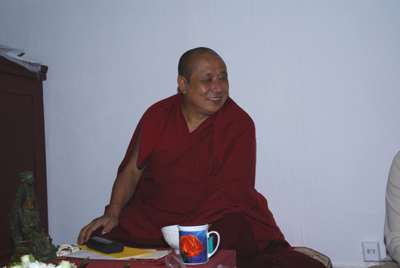
lamaphunstokmittasse
Venerable Chöje Lama Phuntsok


Developing and Manifesting Compassion and Loving Kindness

Teachings presented during the Manjushri Retreat at

Karma Chang Chub Choephel Ling, Heidelberg, in October 2009.

"Until I awaken, I take refuge in
The Buddha, the Dharma, and the Supreme Assembly.
Through the goodness of generosity and other virtues
May I awaken fully in order to help all beings. "


"Namo Guru Manjushri Ye "

A Bodhisattva is someone who aspires and practices to attain liberation for the benefit of all living beings. The three qualities of a Bodhisattva are: He or she never grows tired or becomes weary of working to accomplish his or her wish to liberate beings from suffering, no matter how hard it might be; he or she never hesitates helping other beings, no matter how many there are; a Bodhisattva never stops helping others, no matter how long it will take. Ordinary people think that these qualities are very hard to accomplish. To even be able to approach the possibility of having these characteristics of a Bodhisattva, we have to start by generating and developing loving kindness and compassion. Loving kindness and compassion are the origin and cause for becoming a Bodhisattva. It is inconceivable for somebody who has no loving kindness and compassion to be a Bodhisattva.

There are three categories of compassion, snying-rje-gsum. The first is sems-cän-la-dmigs-pa 'i-snying-rje, 'compassion regarding sentient beings. ' The second is chös-la-dmigs-pa 'i-snying-rje, 'compassion regarding the Dharma. ' The third is dmigs-pa-med-pa 'i-snying-rje, 'compassion without a reference. ' It is necessary to begin meditating love and compassion by practicing the first kind.

Our compassion always necessitates an object, otherwise it isn 't possible to meditate compassion. Thinking of the living beings that are the object of our compassion, we reflect how much they suffer and have the wish that they be free of their suffering and pain. This is what having compassion means. When hearing of suffering, Buddhists automatically think of the many beings living in the six realms of samsara, 'conditioned existence. ' The six classes of beings, 'gro-ba-rigs-drug, are categorized according to the intensity of suffering that they experience. They are: gods, demigods, human beings, animals, hungry ghosts, and hell beings.

The word "suffering " is a general term. There are a great number of ways to suffer, stronger and weaker. There are three categories of suffering, sdug-bsngäl-gsum. The first is sdug-bsngäl-gyi-sdug-bsngäl, 'suffering of suffering. ' The second is 'gyur-ba 'i-sdug-bsngäl, 'suffering of change. ' The third is khyab-pa- 'du-byed-kyi-sdug-bsngäl, 'all-pervading suffering of conditionality. ' These three kinds of suffering are different. I will speak about them shortly.

Suffering of suffering means another misery is heaped on suffering that one already endures. Since everything is transient, one experiences suffering of change when happiness ends and then one suffers again. All-pervading suffering is very subtle and permeates every composite phenomenon. Who experiences these three kinds of suffering? Living beings. Some living beings experience very intense suffering, some experience happiness and suffering alternately, and others only experience all-pervading suffering. Those beings of the six classes who experience the most intense pain, which is suffering of suffering, are hell beings and hungry ghosts. Animals also experience suffering of suffering, but not as strongly as those two classes of beings. Humans mainly experience suffering of change. Gods and demigods go through all-pervading suffering. So, that is the reason the six classes of beings are categorized in that order.

If we think of living beings, some suffer quite a lot, others experience happiness, too, while some only experience subtle suffering. But, humans also experience suffering of suffering. There are rather poor countries, and its peoples suffer tremendously. Furthermore, in many countries there are people who don 't have a job and who aren 't cared for. When they become sick, suffering is heaped upon their misery, which is suffering of suffering, sdug-bsngäl-gyi-sdug-bsngäl. People living in poor countries feel suffering of suffering more strongly, where one catastrophe follows another. Since we can 't perceive hell beings and hungry ghosts, we aren 't really sure what they go through. Since we want to gain certainty of what suffering of suffering means, it 's no use spending much time wondering what beings living in other realms of existence experience. So, looking at people we know or meet and thinking about how distraught people living in poorest countries feel, we see that there is suffering of suffering in the realm of human beings. Of course, many people have a happy life, but it changes and when it does, they face problems and experience 'gyur-ba 'i-sdug-bsngäl. You probably all have experienced suffering of change. No?

Human beings also experience khyab-pa- 'du-byed-kyi-sdug-bsngäl, 'all-pervading suffering of conditionality. ' Let us imagine somebody who is very rich and who tells us, "Oh, I am so well off and am so happy. " Since it is so subtle, this person is also subject to all-pervading suffering but doesn 't notice. We find all three categories of suffering in the human realm.

Since we have the wish to be able to protect and liberate living beings from the three kinds of suffering, we meditate compassion. Our aspiration can be so extensive that it embraces all living beings, but we won 't be able to actually put our wish into practice. We will probably only be able to focus our attention on one, two, three, maybe ten, or maybe one hundred people. Doing this is practicing the first kind of compassion, sems-cän-la-dmigs-pa 'i-snying-rje, 'compassion regarding sentient beings. ' If we try to protect those who suffer from the suffering of change, we can speak to them about the Dharma and what their misery means. Doing this is practicing the second kind of compassion, chös-la-dmigs-pa 'i-snying-rje, 'compassion regarding the Dharma. ' Those persons who suffer from all-pervading suffering are those who say, "Oh, I 'm so well off. I 'm so lucky. I 'm so happy. " They say this because they cling to a self. If we try to help them, we can speak to them about impermanence. Doing this is practicing the third kind of compassion, dmigs-pa-med-pa 'i-snying-rje, 'compassion without a reference. '

Meditating compassion isn 't a matter of formal practice, rather, it means being active. If we want to help beings who are experiencing suffering of suffering, we can give those persons who are hungry something to eat or we can give medicine to those who are sick. We can introduce those persons who are experiencing suffering of change to the path of Dharma. Just knowing that there is a way to overcome their suffering is already a great help to them and makes them happy.

We can 't help persons who suffer from all-pervading suffering and who are very well off by giving them food or medicine or by introducing them to the path of the Dharma. Because they are very proud, they wouldn 't be interested anyway. We can only help them by telling them about impermanence. We shouldn 't be too demanding and speak to them about emptiness, rather, just about the transient nature of all things.

Merely meditating compassion is useless. Developing compassion means first giving rise to the wish to protect all living beings from the three kinds of suffering. It is an aspiration. Practicing compassion means helping them with respect to their situation and according to the suffering that they are experiencing. Giving somebody who is rich 100.- Euro isn 't what practicing compassion is about, because that person already has enough and isn 't in material need. As said, we would be helping somebody who is rich by making him or her aware of impermanence. Having compassion means having the wish to free others from suffering.

We looked at the three categories of suffering and the three compassionate ways to help people become free. They are the definitions of compassion of aspiration and compassion of application. We looked at the suffering that human beings experience, but animals also suffer. As said, we can 't perceive hungry ghosts and hell beings, therefore we can have doubts whether they are in misery, but we can see animals. It 's needless to say that it would be useless to give money to a starving animal. We should alleviate its suffering appropriately and correctly. If we see a hunger-stricken dog and have compassion, we would give it something to eat. We also need to protect animals. Being compassionate towards humans and not towards animals is one-sided compassion. Some people melt with compassion when they see a poverty-stricken person but ignore a suffering animal. Our compassion isn 't restricted but includes all animals, too. We need to help them, just like we help human beings.

Somebody who has been hit by a sharp weapon probably has a wound. It may happen that we run into trouble trying to help him, because he might get mad and hit us. But, what do we do to animals? Instead of protecting and alleviating their suffering, we hurt them, kill them, and chop them into pieces to eat them. They can 't defend themselves. Instead of ignoring or accepting that they are butchered and slaughtered, we should pay ransom for their lives and set them free. We would be practicing compassion by buying just one living animal from a butcher or from a slaughterhouse and setting it free. If we want to practice and develop compassion, we must include animals and not just think of humans. Should we ignore animals, we would be prejudiced, one-sided, narrow-minded, and this isn 't what being compassionate means.

Living beings are the object of our compassion, and we are the ones who are compassionate towards those who suffer. Being compassionate means wishing and protecting living beings from suffering. Giving rise to the wish to help all living beings become free of suffering and putting our wish into practice is the way of a Bodhisattva. Then we are Bodhisattvas.

Does a Bodhisattva suffer? What do you think?

Student: "Yes. Noble Chenrezig shed tears. "

Lama Phuntsok: Do Bodhisattvas suffer immensely? I should formulate it differently: Yes, a Bodhisattva suffers immensely. Why? Although he helps, there are more and more living beings who suffer, so he suffers more and more. Noble Chenrezig shed tears, and his tears are an expression of suffering. Let us not look at others now but see how the three kinds of suffering apply to us.

Suffering of change is hardest for me to bear. I 'm an ordained monk and people often think that I don 't suffer because I 'm free and have no worldly concerns. But I suffer because I 'm responsible for 100 monks and it 's up to me to appease their suffering. I 'm also subject to all-pervading suffering. At the moment, I 'm healthy and everything is going well, but it 's being proud to say, "Oh, I am well. " I can catch a cold when I go out in the rain and then all-pervading suffering once again silenced my pride. All of us are subject to the three kinds of suffering, but usually we aren 't aware of this.

There was a woman in Thailand who told me, "I 'm a good Dharma practitioner. I do my best. " I responded, "But, it 's necessary to practice renunciation to be a good Dharma practitioner. " She replied, "One has to suffer in order to develop renunciation. But I don 't suffer, so how should I develop renunciation? " I asked her, "Why do you say that you don 't suffer? " She answered, "I 'm rich and have enough money. I 'm single and have no children. I can buy anything I want. I have enough to eat. I don 't suffer. " She wasn 't aware of the fact that she, too, is subject to all-pervading suffering. I later taught a short text by Acharya Nagarjuna over a period of 15 days that deals with suffering. This woman took part in the course.

Nagarjuna taught that the essence of suffering is a feeling of being unhappy. One suffers the moment one feels uncomfortable or experiences something unpleasant. For example, one doesn 't feel good when one is hungry due to having missed breakfast, which is suffering. Having a headache means feeling unwell, which is suffering. One doesn 't feel good if one hasn 't slept for two nights, which is suffering. There isn 't anybody who doesn 't experience suffering, but people don 't think about this when they are happy and when things are going well for them. For example, we feel uncomfortable when the mailman brings the electricity bill at the end of the month. What happens when we are on the road and our car runs out of gas? We don 't feel good when we have less money in our wallet after having bought gas. These are all forms of suffering. We only need to notice. There 's no way around it: We 're all subject to suffering in various forms and in different ways. Giving rise to compassion is the skilful means to eliminate all kinds of suffering.

Only in emptiness there is no more suffering. There is no suffering in emptiness. Do you think that suffering and emptiness coexist? There is no suffering and also no joy in emptiness. Practicing compassion in emptiness makes no sense. It 's meaningless to practice compassion in emptiness, because there 's no suffering in emptiness. Compassion is only relevant with respect to living beings and is only meaningful if one aspires and practices to protect them from suffering.

Noble Chenrezig is the Bodhisattva with the most compassion, which is why he has four arms. Buddhists in China worship Chenrezig in the female form. In Nepal, Tibet, and India, he is imagined in the male form. He has these aspects. Being the manifestation of greatest compassion, sngying-rje-chen-po, women can imagine him in the female form and men can imagine him in the male form. It doesn 't make a difference, because whoever awakens great compassion within becomes Noble Chenrezig, sPyän-räs-gzigs in Tibetan, Avalokiteshvara in Sanskrit. It doesn 't matter if we are a man or woman when we meditate Chenrezig, because he is the representative of great compassion.

There has been much discussion on suffering now, which might make many students feel uncomfortable. But we need to be aware of our own suffering. Then we can feel empathy and can generate the wish that no one suffers and that all three kinds of suffering become exhausted and cease. How can we possibly help others, seeing we are beginners on the path of Dharma and have problems dealing with our own suffering? As beginners, we first give rise to the pure mind by having the heart-felt aspiration and wish, "May I be able to help all living beings become free of suffering and pain. " Then we do what we can and thus become a Bodhisattva. How do you see this? Maybe you have questions.

Student: "There is a difference between paying the electricity bill and killing living beings. Isn 't it totally different to unconsciously and unwillingly create suffering when I kill hundreds of mosquitoes or worms while driving my car down the street? It makes me sad, because I do not want to do this. "

Lama Phuntsok: It 's good contemplating cause and results in this way. Thinking that one used electricity and needs to pay the bill is a good way of being aware of cause and results. It 's not so painful for people here to pay their electricity bill, but in Nepal people who have few means suffer when the electricity bill comes. Of course, everyone sees suffering differently. Killing many insects while driving the car is another matter. Driving back and forth is more critical in districts in Asia where streets aren 't paved. It rains strongly in Asia, and one kills even more insects and worms when one drives through the puddles. It is a step knowing that one is killing tiniest insects that one doesn 't see while driving. Thousands of cars drive on paved freeways and roads, so there probably aren 't that many living beings on the streets here anymore. Whether there are cars or not, insects are in the sky.

Many little animals live in gardens, and the only purpose of our garden is to make us happy. Or? We also kill many little animals when we do gardening, so we should refrain from doing this. Yet, we suffer when we have to pay a gardener we hire. I think it 's good to let a garden grow on its own and freely, instead of having lots of flowerbeds. Having one pretty tree in the garden is good for the air, a little pond and a lawn attract many tiny animals. We don 't have a garden at Lekshey Ling in Kathmandu, so I don 't have much experience, but, because we have a different sanitation than in the West, we have problems with insects in our bathrooms. Furthermore, we shouldn 't drink too much bottled water, because so many insects are harmed when winning the water and many animals are hurt by the discarded plastic bottles. Filtering water also kills many insects, so we should be careful there.

Student: "This means that whatever we do causes living beings to suffer. "

Lama Phuntsok: Yes, since this is true, the circle of conditionality is called "samsara, " which is marked by unremitting and incessant suffering. Thinking about this again and again, we try to help sentient beings instead of hurting them. We have to eat, otherwise we suffer from hunger. Also, the microorganisms living in our body will be unhappy if we don 't nourish our body. We therefore need to eat well, which harms others when looking outside but benefits others when looking inside. We are in samsara and every one who is in samsara suffers, whoever and wherever they are. Trying to have a pure mind and trying to develop a good heart by awakening loving kindness and compassion means that we are at least doing a little bit. Let me add that it 's very important to contemplate our own situation and the defects of samsara.

The time has run out and our seminar has come to an end, so again we experience the suffering of change. I hope that these teachings are beneficial for you. Being together like this and in such a pleasant way is a sign that we have a karmic connection with each other. I truly hope that we meet again here in the future to speak a little bit more about the Dharma and to practice together. I make wishing prayers that we attain perfect Buddhahood together and then rejoice together. Jetsün Milarepa said: "I pray that the meditator in the cave and his sponsor attain liberation together. That is my wish. " I also wish that we all attain Buddhahood together. It 's very important to have wishes like this.

There is now a new little Lekshey Ling in the world - a Lekshey Ling baby. It is a Karma Kagyü Center, and our Lama is His Holiness the Gyalwa Karmapa, Ogyen Trinley Dorje. I hope that we all work together. Kamalashila Institute is the mother of the Karma Kagyü Centers in Germany, and a mother needs to have many children. Having many children makes the mother greater. Things are only big in relation to things that are small, so in order to make something big, many small things are needed. There are only a few small Dharma centers in Germany, so we should give birth to many small Dharma centers. And that is why Anneke has brought a new baby to the world in Weißenthurm.

Lama Dorothea Nett: "Thank you, most Venerable Lama Phuntsok. We also want to thank Hannelore for her fabulous translation of the teachings. "

Hannelore: "Thank you for your patience. "

Lama Phuntsok: Everything is impermanent, and tomorrow morning I will leave. One of the four things to reflect when contemplating impermanence is that everything that comes together separates. It 's the same for us. We met and part again. I truly hope we meet again here next year. Thank you very much. Let us now recite the dedication prayers together.


Dedication Prayers

Through this goodness, may omniscience be attained

and thereby may every enemy (mental defilement) be overcome.

May beings be liberated from the ocean of samsara

that is troubled by waves of birth, old age, sickness, and death.

By this virtue may I quickly attain the state of Guru Buddha, and then

lead every being without exception to that very state!

May precious and supreme Bodhicitta that has not been generated now be so,

and may precious Bodhicitta that has already been never decline, but continuously increase!

May the life of the Glorious Lama remain steadfast and firm.

May peace and happiness fully arise for beings as limitless in number as space is vast in its extent.

Having accumulated merit and purified negativities, may I and all living beings without exception

swiftly establish the levels and grounds of Buddhahood.

The Long Life Prayer for H.H. the XVIIth Gyalwa Karmapa, Ogyen Trinley Dorje

Naturally arising Dharmakaya, unchanging and ever-present,

Karmapa, you appear as the form kayas ' magical illusions.

May your three secret vajras remain stable in the realms

And your infinite, spontaneous activity blaze in glory.

lichtstrahl

Photo of Venerable Chöje Lama Phuntsok offering teachings at Karma Lekshey Ling in Weißenthurm, Germany, in October 2009. Wonderful thanks to Lama Dorothea Nett for having organized the most auspicious event of the teachings in this article in Heidelberg, and special thanks to Michael Slaby for having recorded them and for having made the CD available to us. Awesome photo taken by Ursula Bollinger from Bietigheim and generously offered for Lama Phuntsok 's article here. In reliance on the fabulous simultaneous translation of Tibetan into German by Hannelore Wenderoth, these teachings were translated into English and arranged by Gaby Hollmann, responsible and apologizing for any mistakes. All persons and institutes mentioned here have copyright for their contribution. Lama Phuntsok 's article is made available by the Dharma Download Project of Khenpo Karma Namgyal at Karma Lekshey Ling Institute in Kathmandu, by Karma Chang Chub Choephel Ling in Heidelberg, and by Karma Sherab Ling in Münster for personal use only; it may not be reproduced in any form nor be published. Munich, 2009.

Details
Zugriffe: 2996

Hier bald einige Links zur Schule, zum Kloster, zur Karma Kagyü Linie und zum Buddhismus:

Karma Lekshey Ling Institute


Kamalashila Institut


Karma Leksheyling Institute Puja Requests


Himalaya Karuna e.V.


Karma Lekshe Ling Foundation Bhutan


Karma Lekshe Ling Shedra

Details
Zugriffe: 3823

Herausgeber:


Brücke der Freundschaft e.V.
zur Förderung der Projekte des
"Karma Leksheling Public Educanional Trust"
in Katmandu

Geschäftsstelle

Selma-Zwienicki-Str. 14
28201 Bremen

e-mail: lekling-de(add)web.de

Geschäftsführendes Vorstandsmitglied:
Kelsang Tsutrim

Vereinsregister Amtsgericht Aktenzeichen VR 7641 HB ; Verein wurde gegründet am 15.07.2012.
Umsatzsteueridentifikationsnummer nach § 27a des Umsatzsteuergesetzes: DE xxxxxxxx

Bankverbindung :
GLS Bank

Kontonummer 2037510900

BLZ: 430 609 67

IBAN: DE 40 43060967 2037510900


Alle Inhalte, Bilder, sowie Texte unterliegen unseren Copyright.

Technische Betreuung
Johannes Billing 


Die Website basiert auf Joomla 5.x !.


Haftungshinweis


Die Brücke der Freunschaft e.V. übernimmt keine Haftung für die Erreichbarkeit ihrer Internetseiten, für deren technische Verwendbarkeit und Virenfreiheit, für Fehler, die durch falsche Angaben, falsche Schreibweisen oder falsch angegebene Links entstehen.

Für die Inhalte aller auf der Brücke der Freunschaft e.V.-Website eingebundenen Links zu fremden Websites, die von Dritten zu verantworten sind, wird keine wie auch immer geartete Haftung bzgl. dieser Inhalte übernommen. Die Brücke der Freunschaft e.V. macht sich diese Inhalte in keinem Fall zu eigen.
Die Brücke der Freunschaft e.V. ist bemüht, für die Richtigkeit und Aktualität aller auf der Website enthaltenen Informationen und Daten zu sorgen. Für die Aktualität, Richtigkeit und Vollständigkeit aller oder einzelner Informationen und Daten wird jedoch keine Gewähr übernommen. Dies gilt auch für Websites, auf die durch einen Hyperlink verwiesen wird.
Das Layout, die Texte und Grafiken auf allen Seiten der Karma Kagyü Gemeinschaft Deutschland e.V. unterliegen - soweit nicht ausdrücklich andere Urheber angegeben sind - dem Copyright der Brücke der Freunschaft e.V.
Die Vervielfältigung von Informationen oder Daten, insbesondere die Verwendung von Texten, Textteilen oder Bildmaterial bedarf der vorherigen Zustimmung des Herausgebers.
Andere Firmen- und Produktbezeichnungen sind Warenzeichen bzw. eingetragene Warenzeichen ihrer jeweiligen Firmen.

Datenschutzerklärung

Wir freuen uns sehr über Ihr Interesse an unserem Unternehmen. Datenschutz hat einen besonders hohen Stellenwert für die Geschäftsleitung der Brücke der Freundschaft e.V.. Eine Nutzung der Internetseiten der Brücke der Freundschaft e.V. ist grundsätzlich ohne jede Angabe personenbezogener Daten möglich. Sofern eine betroffene Person besondere Services unseres Unternehmens über unsere Internetseite in Anspruch nehmen möchte, könnte jedoch eine Verarbeitung personenbezogener Daten erforderlich werden. Ist die Verarbeitung personenbezogener Daten erforderlich und besteht für eine solche Verarbeitung keine gesetzliche Grundlage, holen wir generell eine Einwilligung der betroffenen Person ein.

Die Verarbeitung personenbezogener Daten, beispielsweise des Namens, der Anschrift, E-Mail-Adresse oder Telefonnummer einer betroffenen Person, erfolgt stets im Einklang mit der Datenschutz-Grundverordnung und in Übereinstimmung mit den für die Brücke der Freundschaft e.V. geltenden landesspezifischen Datenschutzbestimmungen. Mittels dieser Datenschutzerklärung möchte unser Unternehmen die Öffentlichkeit über Art, Umfang und Zweck der von uns erhobenen, genutzten und verarbeiteten personenbezogenen Daten informieren. Ferner werden betroffene Personen mittels dieser Datenschutzerklärung über die ihnen zustehenden Rechte aufgeklärt.

Die Brücke der Freundschaft e.V. hat als für die Verarbeitung Verantwortlicher zahlreiche technische und organisatorische Maßnahmen umgesetzt, um einen möglichst lückenlosen Schutz der über diese Internetseite verarbeiteten personenbezogenen Daten sicherzustellen. Dennoch können Internetbasierte Datenübertragungen grundsätzlich Sicherheitslücken aufweisen, sodass ein absoluter Schutz nicht gewährleistet werden kann. Aus diesem Grund steht es jeder betroffenen Person frei, personenbezogene Daten auch auf alternativen Wegen, beispielsweise telefonisch, an uns zu übermitteln.

1. Begriffsbestimmungen

Die Datenschutzerklärung der Brücke der Freundschaft e.V. beruht auf den Begrifflichkeiten, die durch den Europäischen Richtlinien- und Verordnungsgeber beim Erlass der Datenschutz-Grundverordnung (DS-GVO) verwendet wurden. Unsere Datenschutzerklärung soll sowohl für die Öffentlichkeit als auch für unsere Kunden und Geschäftspartner einfach lesbar und verständlich sein. Um dies zu gewährleisten, möchten wir vorab die verwendeten Begrifflichkeiten erläutern.

Wir verwenden in dieser Datenschutzerklärung unter anderem die folgenden Begriffe:

  • a)    personenbezogene Daten

    Personenbezogene Daten sind alle Informationen, die sich auf eine identifizierte oder identifizierbare natürliche Person (im Folgenden „betroffene Person“) beziehen. Als identifizierbar wird eine natürliche Person angesehen, die direkt oder indirekt, insbesondere mittels Zuordnung zu einer Kennung wie einem Namen, zu einer Kennnummer, zu Standortdaten, zu einer Online-Kennung oder zu einem oder mehreren besonderen Merkmalen, die Ausdruck der physischen, physiologischen, genetischen, psychischen, wirtschaftlichen, kulturellen oder sozialen Identität dieser natürlichen Person sind, identifiziert werden kann.

  • b)    betroffene Person

    Betroffene Person ist jede identifizierte oder identifizierbare natürliche Person, deren personenbezogene Daten von dem für die Verarbeitung Verantwortlichen verarbeitet werden.

  • c)    Verarbeitung

    Verarbeitung ist jeder mit oder ohne Hilfe automatisierter Verfahren ausgeführte Vorgang oder jede solche Vorgangsreihe im Zusammenhang mit personenbezogenen Daten wie das Erheben, das Erfassen, die Organisation, das Ordnen, die Speicherung, die Anpassung oder Veränderung, das Auslesen, das Abfragen, die Verwendung, die Offenlegung durch Übermittlung, Verbreitung oder eine andere Form der Bereitstellung, den Abgleich oder die Verknüpfung, die Einschränkung, das Löschen oder die Vernichtung.

  • d)    Einschränkung der Verarbeitung

    Einschränkung der Verarbeitung ist die Markierung gespeicherter personenbezogener Daten mit dem Ziel, ihre künftige Verarbeitung einzuschränken.

  • e)    Profiling

    Profiling ist jede Art der automatisierten Verarbeitung personenbezogener Daten, die darin besteht, dass diese personenbezogenen Daten verwendet werden, um bestimmte persönliche Aspekte, die sich auf eine natürliche Person beziehen, zu bewerten, insbesondere, um Aspekte bezüglich Arbeitsleistung, wirtschaftlicher Lage, Gesundheit, persönlicher Vorlieben, Interessen, Zuverlässigkeit, Verhalten, Aufenthaltsort oder Ortswechsel dieser natürlichen Person zu analysieren oder vorherzusagen.

  • f)     Pseudonymisierung

    Pseudonymisierung ist die Verarbeitung personenbezogener Daten in einer Weise, auf welche die personenbezogenen Daten ohne Hinzuziehung zusätzlicher Informationen nicht mehr einer spezifischen betroffenen Person zugeordnet werden können, sofern diese zusätzlichen Informationen gesondert aufbewahrt werden und technischen und organisatorischen Maßnahmen unterliegen, die gewährleisten, dass die personenbezogenen Daten nicht einer identifizierten oder identifizierbaren natürlichen Person zugewiesen werden.

  • g)    Verantwortlicher oder für die Verarbeitung Verantwortlicher

    Verantwortlicher oder für die Verarbeitung Verantwortlicher ist die natürliche oder juristische Person, Behörde, Einrichtung oder andere Stelle, die allein oder gemeinsam mit anderen über die Zwecke und Mittel der Verarbeitung von personenbezogenen Daten entscheidet. Sind die Zwecke und Mittel dieser Verarbeitung durch das Unionsrecht oder das Recht der Mitgliedstaaten vorgegeben, so kann der Verantwortliche beziehungsweise können die bestimmten Kriterien seiner Benennung nach dem Unionsrecht oder dem Recht der Mitgliedstaaten vorgesehen werden.

  • h)    Auftragsverarbeiter

    Auftragsverarbeiter ist eine natürliche oder juristische Person, Behörde, Einrichtung oder andere Stelle, die personenbezogene Daten im Auftrag des Verantwortlichen verarbeitet.

  • i)      Empfänger

    Empfänger ist eine natürliche oder juristische Person, Behörde, Einrichtung oder andere Stelle, der personenbezogene Daten offengelegt werden, unabhängig davon, ob es sich bei ihr um einen Dritten handelt oder nicht. Behörden, die im Rahmen eines bestimmten Untersuchungsauftrags nach dem Unionsrecht oder dem Recht der Mitgliedstaaten möglicherweise personenbezogene Daten erhalten, gelten jedoch nicht als Empfänger.

  • j)      Dritter

    Dritter ist eine natürliche oder juristische Person, Behörde, Einrichtung oder andere Stelle außer der betroffenen Person, dem Verantwortlichen, dem Auftragsverarbeiter und den Personen, die unter der unmittelbaren Verantwortung des Verantwortlichen oder des Auftragsverarbeiters befugt sind, die personenbezogenen Daten zu verarbeiten.

  • k)    Einwilligung

    Einwilligung ist jede von der betroffenen Person freiwillig für den bestimmten Fall in informierter Weise und unmissverständlich abgegebene Willensbekundung in Form einer Erklärung oder einer sonstigen eindeutigen bestätigenden Handlung, mit der die betroffene Person zu verstehen gibt, dass sie mit der Verarbeitung der sie betreffenden personenbezogenen Daten einverstanden ist.

2. Name und Anschrift des für die Verarbeitung Verantwortlichen

Verantwortlicher im Sinne der Datenschutz-Grundverordnung, sonstiger in den Mitgliedstaaten der Europäischen Union geltenden Datenschutzgesetze und anderer Bestimmungen mit datenschutzrechtlichem Charakter ist die:

Brücke der Freundschaft e.V.

Selma-Zwienicki-Str. 14

28201 Bremen

Deutschland

Tel.: 0421-87824158

E-Mail: Diese E-Mail-Adresse ist vor Spambots geschützt! Zur Anzeige muss JavaScript eingeschaltet sein.

Website: www.bruecke-der-freundschaft-schulverein.de

3. Erfassung von allgemeinen Daten und Informationen

Die Internetseite der Brücke der Freundschaft e.V. erfasst mit jedem Aufruf der Internetseite durch eine betroffene Person oder ein automatisiertes System eine Reihe von allgemeinen Daten und Informationen. Diese allgemeinen Daten und Informationen werden in den Logfiles des Servers gespeichert. Erfasst werden können die (1) verwendeten Browsertypen und Versionen, (2) das vom zugreifenden System verwendete Betriebssystem, (3) die Internetseite, von welcher ein zugreifendes System auf unsere Internetseite gelangt (sogenannte Referrer), (4) die Unterwebseiten, welche über ein zugreifendes System auf unserer Internetseite angesteuert werden, (5) das Datum und die Uhrzeit eines Zugriffs auf die Internetseite, (6) eine Internet-Protokoll-Adresse (IP-Adresse), (7) der Internet-Service-Provider des zugreifenden Systems und (8) sonstige ähnliche Daten und Informationen, die der Gefahrenabwehr im Falle von Angriffen auf unsere informationstechnologischen Systeme dienen.

Bei der Nutzung dieser allgemeinen Daten und Informationen zieht die Brücke der Freundschaft e.V. keine Rückschlüsse auf die betroffene Person. Diese Informationen werden vielmehr benötigt, um (1) die Inhalte unserer Internetseite korrekt auszuliefern, (2) die Inhalte unserer Internetseite sowie die Werbung für diese zu optimieren, (3) die dauerhafte Funktionsfähigkeit unserer informationstechnologischen Systeme und der Technik unserer Internetseite zu gewährleisten sowie (4) um Strafverfolgungsbehörden im Falle eines Cyberangriffes die zur Strafverfolgung notwendigen Informationen bereitzustellen. Diese anonym erhobenen Daten und Informationen werden durch die Brücke der Freundschaft e.V. daher einerseits statistisch und ferner mit dem Ziel ausgewertet, den Datenschutz und die Datensicherheit in unserem Unternehmen zu erhöhen, um letztlich ein optimales Schutzniveau für die von uns verarbeiteten personenbezogenen Daten sicherzustellen. Die anonymen Daten der Server-Logfiles werden getrennt von allen durch eine betroffene Person angegebenen personenbezogenen Daten gespeichert.

4. Kontaktmöglichkeit über die Internetseite

Die Internetseite der Brücke der Freundschaft e.V. enthält aufgrund von gesetzlichen Vorschriften Angaben, die eine schnelle elektronische Kontaktaufnahme zu unserem Unternehmen sowie eine unmittelbare Kommunikation mit uns ermöglichen, was ebenfalls eine allgemeine Adresse der sogenannten elektronischen Post (E-Mail-Adresse) umfasst. Sofern eine betroffene Person per E-Mail oder über ein Kontaktformular den Kontakt mit dem für die Verarbeitung Verantwortlichen aufnimmt, werden die von der betroffenen Person übermittelten personenbezogenen Daten automatisch gespeichert. Solche auf freiwilliger Basis von einer betroffenen Person an den für die Verarbeitung Verantwortlichen übermittelten personenbezogenen Daten werden für Zwecke der Bearbeitung oder der Kontaktaufnahme zur betroffenen Person gespeichert. Es erfolgt keine Weitergabe dieser personenbezogenen Daten an Dritte.

5. Routinemäßige Löschung und Sperrung von personenbezogenen Daten

Der für die Verarbeitung Verantwortliche verarbeitet und speichert personenbezogene Daten der betroffenen Person nur für den Zeitraum, der zur Erreichung des Speicherungszwecks erforderlich ist oder sofern dies durch den Europäischen Richtlinien- und Verordnungsgeber oder einen anderen Gesetzgeber in Gesetzen oder Vorschriften, welchen der für die Verarbeitung Verantwortliche unterliegt, vorgesehen wurde.

Entfällt der Speicherungszweck oder läuft eine vom Europäischen Richtlinien- und Verordnungsgeber oder einem anderen zuständigen Gesetzgeber vorgeschriebene Speicherfrist ab, werden die personenbezogenen Daten routinemäßig und entsprechend den gesetzlichen Vorschriften gesperrt oder gelöscht.

6. Rechte der betroffenen Person

  • a)    Recht auf Bestätigung

    Jede betroffene Person hat das vom Europäischen Richtlinien- und Verordnungsgeber eingeräumte Recht, von dem für die Verarbeitung Verantwortlichen eine Bestätigung darüber zu verlangen, ob sie betreffende personenbezogene Daten verarbeitet werden. Möchte eine betroffene Person dieses Bestätigungsrecht in Anspruch nehmen, kann sie sich hierzu jederzeit an einen Mitarbeiter des für die Verarbeitung Verantwortlichen wenden.

  • b)    Recht auf Auskunft

    Jede von der Verarbeitung personenbezogener Daten betroffene Person hat das vom Europäischen Richtlinien- und Verordnungsgeber gewährte Recht, jederzeit von dem für die Verarbeitung Verantwortlichen unentgeltliche Auskunft über die zu seiner Person gespeicherten personenbezogenen Daten und eine Kopie dieser Auskunft zu erhalten. Ferner hat der Europäische Richtlinien- und Verordnungsgeber der betroffenen Person Auskunft über folgende Informationen zugestanden:

    • die Verarbeitungszwecke
    • die Kategorien personenbezogener Daten, die verarbeitet werden
    • die Empfänger oder Kategorien von Empfängern, gegenüber denen die personenbezogenen Daten offengelegt worden sind oder noch offengelegt werden, insbesondere bei Empfängern in Drittländern oder bei internationalen Organisationen
    • falls möglich die geplante Dauer, für die die personenbezogenen Daten gespeichert werden, oder, falls dies nicht möglich ist, die Kriterien für die Festlegung dieser Dauer
    • das Bestehen eines Rechts auf Berichtigung oder Löschung der sie betreffenden personenbezogenen Daten oder auf Einschränkung der Verarbeitung durch den Verantwortlichen oder eines Widerspruchsrechts gegen diese Verarbeitung
    • das Bestehen eines Beschwerderechts bei einer Aufsichtsbehörde
    • wenn die personenbezogenen Daten nicht bei der betroffenen Person erhoben werden: Alle verfügbaren Informationen über die Herkunft der Daten
    • das Bestehen einer automatisierten Entscheidungsfindung einschließlich Profiling gemäß Artikel 22 Abs.1 und 4 DS-GVO und — zumindest in diesen Fällen — aussagekräftige Informationen über die involvierte Logik sowie die Tragweite und die angestrebten Auswirkungen einer derartigen Verarbeitung für die betroffene Person

    Ferner steht der betroffenen Person ein Auskunftsrecht darüber zu, ob personenbezogene Daten an ein Drittland oder an eine internationale Organisation übermittelt wurden. Sofern dies der Fall ist, so steht der betroffenen Person im Übrigen das Recht zu, Auskunft über die geeigneten Garantien im Zusammenhang mit der Übermittlung zu erhalten.

    Möchte eine betroffene Person dieses Auskunftsrecht in Anspruch nehmen, kann sie sich hierzu jederzeit an einen Mitarbeiter des für die Verarbeitung Verantwortlichen wenden.

  • c)    Recht auf Berichtigung

    Jede von der Verarbeitung personenbezogener Daten betroffene Person hat das vom Europäischen Richtlinien- und Verordnungsgeber gewährte Recht, die unverzügliche Berichtigung sie betreffender unrichtiger personenbezogener Daten zu verlangen. Ferner steht der betroffenen Person das Recht zu, unter Berücksichtigung der Zwecke der Verarbeitung, die Vervollständigung unvollständiger personenbezogener Daten — auch mittels einer ergänzenden Erklärung — zu verlangen.

    Möchte eine betroffene Person dieses Berichtigungsrecht in Anspruch nehmen, kann sie sich hierzu jederzeit an einen Mitarbeiter des für die Verarbeitung Verantwortlichen wenden.

  • d)    Recht auf Löschung (Recht auf Vergessen werden)

    Jede von der Verarbeitung personenbezogener Daten betroffene Person hat das vom Europäischen Richtlinien- und Verordnungsgeber gewährte Recht, von dem Verantwortlichen zu verlangen, dass die sie betreffenden personenbezogenen Daten unverzüglich gelöscht werden, sofern einer der folgenden Gründe zutrifft und soweit die Verarbeitung nicht erforderlich ist:

    • Die personenbezogenen Daten wurden für solche Zwecke erhoben oder auf sonstige Weise verarbeitet, für welche sie nicht mehr notwendig sind.
    • Die betroffene Person widerruft ihre Einwilligung, auf die sich die Verarbeitung gemäß Art. 6 Abs. 1 Buchstabe a DS-GVO oder Art. 9 Abs. 2 Buchstabe a DS-GVO stützte, und es fehlt an einer anderweitigen Rechtsgrundlage für die Verarbeitung.
    • Die betroffene Person legt gemäß Art. 21 Abs. 1 DS-GVO Widerspruch gegen die Verarbeitung ein, und es liegen keine vorrangigen berechtigten Gründe für die Verarbeitung vor, oder die betroffene Person legt gemäß Art. 21 Abs. 2 DS-GVO Widerspruch gegen die Verarbeitung ein.
    • Die personenbezogenen Daten wurden unrechtmäßig verarbeitet.
    • Die Löschung der personenbezogenen Daten ist zur Erfüllung einer rechtlichen Verpflichtung nach dem Unionsrecht oder dem Recht der Mitgliedstaaten erforderlich, dem der Verantwortliche unterliegt.
    • Die personenbezogenen Daten wurden in Bezug auf angebotene Dienste der Informationsgesellschaft gemäß Art. 8 Abs. 1 DS-GVO erhoben.

    Sofern einer der oben genannten Gründe zutrifft und eine betroffene Person die Löschung von personenbezogenen Daten, die bei der Brücke der Freundschaft e.V. gespeichert sind, veranlassen möchte, kann sie sich hierzu jederzeit an einen Mitarbeiter des für die Verarbeitung Verantwortlichen wenden. Der Mitarbeiter der Brücke der Freundschaft e.V. wird veranlassen, dass dem Löschverlangen unverzüglich nachgekommen wird.

    Wurden die personenbezogenen Daten von der Brücke der Freundschaft e.V. öffentlich gemacht und ist unser Unternehmen als Verantwortlicher gemäß Art. 17 Abs. 1 DS-GVO zur Löschung der personenbezogenen Daten verpflichtet, so trifft die Brücke der Freundschaft e.V. unter Berücksichtigung der verfügbaren Technologie und der Implementierungskosten angemessene Maßnahmen, auch technischer Art, um andere für die Datenverarbeitung Verantwortliche, welche die veröffentlichten personenbezogenen Daten verarbeiten, darüber in Kenntnis zu setzen, dass die betroffene Person von diesen anderen für die Datenverarbeitung Verantwortlichen die Löschung sämtlicher Links zu diesen personenbezogenen Daten oder von Kopien oder Replikationen dieser personenbezogenen Daten verlangt hat, soweit die Verarbeitung nicht erforderlich ist. Der Mitarbeiter der Brücke der Freundschaft e.V. wird im Einzelfall das Notwendige veranlassen.

  • e)    Recht auf Einschränkung der Verarbeitung

    Jede von der Verarbeitung personenbezogener Daten betroffene Person hat das vom Europäischen Richtlinien- und Verordnungsgeber gewährte Recht, von dem Verantwortlichen die Einschränkung der Verarbeitung zu verlangen, wenn eine der folgenden Voraussetzungen gegeben ist:

    • Die Richtigkeit der personenbezogenen Daten wird von der betroffenen Person bestritten, und zwar für eine Dauer, die es dem Verantwortlichen ermöglicht, die Richtigkeit der personenbezogenen Daten zu überprüfen.
    • Die Verarbeitung ist unrechtmäßig, die betroffene Person lehnt die Löschung der personenbezogenen Daten ab und verlangt stattdessen die Einschränkung der Nutzung der personenbezogenen Daten.
    • Der Verantwortliche benötigt die personenbezogenen Daten für die Zwecke der Verarbeitung nicht länger, die betroffene Person benötigt sie jedoch zur Geltendmachung, Ausübung oder Verteidigung von Rechtsansprüchen.
    • Die betroffene Person hat Widerspruch gegen die Verarbeitung gem. Art. 21 Abs. 1 DS-GVO eingelegt und es steht noch nicht fest, ob die berechtigten Gründe des Verantwortlichen gegenüber denen der betroffenen Person überwiegen.

    Sofern eine der oben genannten Voraussetzungen gegeben ist und eine betroffene Person die Einschränkung von personenbezogenen Daten, die bei der Brücke der Freundschaft e.V. gespeichert sind, verlangen möchte, kann sie sich hierzu jederzeit an einen Mitarbeiter des für die Verarbeitung Verantwortlichen wenden. Der Mitarbeiter der Brücke der Freundschaft e.V. wird die Einschränkung der Verarbeitung veranlassen.

  • f)     Recht auf Datenübertragbarkeit

    Jede von der Verarbeitung personenbezogener Daten betroffene Person hat das vom Europäischen Richtlinien- und Verordnungsgeber gewährte Recht, die sie betreffenden personenbezogenen Daten, welche durch die betroffene Person einem Verantwortlichen bereitgestellt wurden, in einem strukturierten, gängigen und maschinenlesbaren Format zu erhalten. Sie hat außerdem das Recht, diese Daten einem anderen Verantwortlichen ohne Behinderung durch den Verantwortlichen, dem die personenbezogenen Daten bereitgestellt wurden, zu übermitteln, sofern die Verarbeitung auf der Einwilligung gemäß Art. 6 Abs. 1 Buchstabe a DS-GVO oder Art. 9 Abs. 2 Buchstabe a DS-GVO oder auf einem Vertrag gemäß Art. 6 Abs. 1 Buchstabe b DS-GVO beruht und die Verarbeitung mithilfe automatisierter Verfahren erfolgt, sofern die Verarbeitung nicht für die Wahrnehmung einer Aufgabe erforderlich ist, die im öffentlichen Interesse liegt oder in Ausübung öffentlicher Gewalt erfolgt, welche dem Verantwortlichen übertragen wurde.

    Ferner hat die betroffene Person bei der Ausübung ihres Rechts auf Datenübertragbarkeit gemäß Art. 20 Abs. 1 DS-GVO das Recht, zu erwirken, dass die personenbezogenen Daten direkt von einem Verantwortlichen an einen anderen Verantwortlichen übermittelt werden, soweit dies technisch machbar ist und sofern hiervon nicht die Rechte und Freiheiten anderer Personen beeinträchtigt werden.

    Zur Geltendmachung des Rechts auf Datenübertragbarkeit kann sich die betroffene Person jederzeit an einen Mitarbeiter der Brücke der Freundschaft e.V. wenden.

  • g)    Recht auf Widerspruch

    Jede von der Verarbeitung personenbezogener Daten betroffene Person hat das vom Europäischen Richtlinien- und Verordnungsgeber gewährte Recht, aus Gründen, die sich aus ihrer besonderen Situation ergeben, jederzeit gegen die Verarbeitung sie betreffender personenbezogener Daten, die aufgrund von Art. 6 Abs. 1 Buchstaben e oder f DS-GVO erfolgt, Widerspruch einzulegen. Dies gilt auch für ein auf diese Bestimmungen gestütztes Profiling.

    Die Brücke der Freundschaft e.V. verarbeitet die personenbezogenen Daten im Falle des Widerspruchs nicht mehr, es sei denn, wir können zwingende schutzwürdige Gründe für die Verarbeitung nachweisen, die den Interessen, Rechten und Freiheiten der betroffenen Person überwiegen, oder die Verarbeitung dient der Geltendmachung, Ausübung oder Verteidigung von Rechtsansprüchen.

    Verarbeitet die Brücke der Freundschaft e.V. personenbezogene Daten, um Direktwerbung zu betreiben, so hat die betroffene Person das Recht, jederzeit Widerspruch gegen die Verarbeitung der personenbezogenen Daten zum Zwecke derartiger Werbung einzulegen. Dies gilt auch für das Profiling, soweit es mit solcher Direktwerbung in Verbindung steht. Widerspricht die betroffene Person gegenüber der Brücke der Freundschaft e.V. der Verarbeitung für Zwecke der Direktwerbung, so wird die Brücke der Freundschaft e.V. die personenbezogenen Daten nicht mehr für diese Zwecke verarbeiten.

    Zudem hat die betroffene Person das Recht, aus Gründen, die sich aus ihrer besonderen Situation ergeben, gegen die sie betreffende Verarbeitung personenbezogener Daten, die bei der Brücke der Freundschaft e.V. zu wissenschaftlichen oder historischen Forschungszwecken oder zu statistischen Zwecken gemäß Art. 89 Abs. 1 DS-GVO erfolgen, Widerspruch einzulegen, es sei denn, eine solche Verarbeitung ist zur Erfüllung einer im öffentlichen Interesse liegenden Aufgabe erforderlich.

    Zur Ausübung des Rechts auf Widerspruch kann sich die betroffene Person direkt jeden Mitarbeiter der Brücke der Freundschaft e.V. oder einen anderen Mitarbeiter wenden. Der betroffenen Person steht es ferner frei, im Zusammenhang mit der Nutzung von Diensten der Informationsgesellschaft, ungeachtet der Richtlinie 2002/58/EG, ihr Widerspruchsrecht mittels automatisierter Verfahren auszuüben, bei denen technische Spezifikationen verwendet werden.

  • h)    Automatisierte Entscheidungen im Einzelfall einschließlich Profiling

    Jede von der Verarbeitung personenbezogener Daten betroffene Person hat das vom Europäischen Richtlinien- und Verordnungsgeber gewährte Recht, nicht einer ausschließlich auf einer automatisierten Verarbeitung — einschließlich Profiling — beruhenden Entscheidung unterworfen zu werden, die ihr gegenüber rechtliche Wirkung entfaltet oder sie in ähnlicher Weise erheblich beeinträchtigt, sofern die Entscheidung (1) nicht für den Abschluss oder die Erfüllung eines Vertrags zwischen der betroffenen Person und dem Verantwortlichen erforderlich ist, oder (2) aufgrund von Rechtsvorschriften der Union oder der Mitgliedstaaten, denen der Verantwortliche unterliegt, zulässig ist und diese Rechtsvorschriften angemessene Maßnahmen zur Wahrung der Rechte und Freiheiten sowie der berechtigten Interessen der betroffenen Person enthalten oder (3) mit ausdrücklicher Einwilligung der betroffenen Person erfolgt.

    Ist die Entscheidung (1) für den Abschluss oder die Erfüllung eines Vertrags zwischen der betroffenen Person und dem Verantwortlichen erforderlich oder (2) erfolgt sie mit ausdrücklicher Einwilligung der betroffenen Person, trifft die Brücke der Freundschaft e.V. angemessene Maßnahmen, um die Rechte und Freiheiten sowie die berechtigten Interessen der betroffenen Person zu wahren, wozu mindestens das Recht auf Erwirkung des Eingreifens einer Person seitens des Verantwortlichen, auf Darlegung des eigenen Standpunkts und auf Anfechtung der Entscheidung gehört.

    Möchte die betroffene Person Rechte mit Bezug auf automatisierte Entscheidungen geltend machen, kann sie sich hierzu jederzeit an einen Mitarbeiter des für die Verarbeitung Verantwortlichen wenden.

  • i)      Recht auf Widerruf einer datenschutzrechtlichen Einwilligung

    Jede von der Verarbeitung personenbezogener Daten betroffene Person hat das vom Europäischen Richtlinien- und Verordnungsgeber gewährte Recht, eine Einwilligung zur Verarbeitung personenbezogener Daten jederzeit zu widerrufen.

    Möchte die betroffene Person ihr Recht auf Widerruf einer Einwilligung geltend machen, kann sie sich hierzu jederzeit an einen Mitarbeiter des für die Verarbeitung Verantwortlichen wenden.

7. Datenschutzbestimmungen zu Einsatz und Verwendung von Facebook

Der für die Verarbeitung Verantwortliche hat auf dieser Internetseite Komponenten des Unternehmens Facebook integriert. Facebook ist ein soziales Netzwerk.

Ein soziales Netzwerk ist ein im Internet betriebener sozialer Treffpunkt, eine Online-Gemeinschaft, die es den Nutzern in der Regel ermöglicht, untereinander zu kommunizieren und im virtuellen Raum zu interagieren. Ein soziales Netzwerk kann als Plattform zum Austausch von Meinungen und Erfahrungen dienen oder ermöglicht es der Internetgemeinschaft, persönliche oder unternehmensbezogene Informationen bereitzustellen. Facebook ermöglicht den Nutzern des sozialen Netzwerkes unter anderem die Erstellung von privaten Profilen, den Upload von Fotos und eine Vernetzung über Freundschaftsanfragen.

Betreibergesellschaft von Facebook ist die Facebook, Inc., 1 Hacker Way, Menlo Park, CA 94025, USA. Für die Verarbeitung personenbezogener Daten Verantwortlicher ist, wenn eine betroffene Person außerhalb der USA oder Kanada lebt, die Facebook Ireland Ltd., 4 Grand Canal Square, Grand Canal Harbour, Dublin 2, Ireland.

Durch jeden Aufruf einer der Einzelseiten dieser Internetseite, die durch den für die Verarbeitung Verantwortlichen betrieben wird und auf welcher eine Facebook-Komponente (Facebook-Plug-In) integriert wurde, wird der Internetbrowser auf dem informationstechnologischen System der betroffenen Person automatisch durch die jeweilige Facebook-Komponente veranlasst, eine Darstellung der entsprechenden Facebook-Komponente von Facebook herunterzuladen. Eine Gesamtübersicht über alle Facebook-Plug-Ins kann unter https://developers.facebook.com/docs/plugins/?locale=de_DE abgerufen werden. Im Rahmen dieses technischen Verfahrens erhält Facebook Kenntnis darüber, welche konkrete Unterseite unserer Internetseite durch die betroffene Person besucht wird.

Sofern die betroffene Person gleichzeitig bei Facebook eingeloggt ist, erkennt Facebook mit jedem Aufruf unserer Internetseite durch die betroffene Person und während der gesamten Dauer des jeweiligen Aufenthaltes auf unserer Internetseite, welche konkrete Unterseite unserer Internetseite die betroffene Person besucht. Diese Informationen werden durch die Facebook-Komponente gesammelt und durch Facebook dem jeweiligen Facebook-Account der betroffenen Person zugeordnet. Betätigt die betroffene Person einen der auf unserer Internetseite integrierten Facebook-Buttons, beispielsweise den „Gefällt mir“-Button, oder gibt die betroffene Person einen Kommentar ab, ordnet Facebook diese Information dem persönlichen Facebook-Benutzerkonto der betroffenen Person zu und speichert diese personenbezogenen Daten.

Facebook erhält über die Facebook-Komponente immer dann eine Information darüber, dass die betroffene Person unsere Internetseite besucht hat, wenn die betroffene Person zum Zeitpunkt des Aufrufs unserer Internetseite gleichzeitig bei Facebook eingeloggt ist; dies findet unabhängig davon statt, ob die betroffene Person die Facebook-Komponente anklickt oder nicht. Ist eine derartige Übermittlung dieser Informationen an Facebook von der betroffenen Person nicht gewollt, kann diese die Übermittlung dadurch verhindern, dass sie sich vor einem Aufruf unserer Internetseite aus ihrem Facebook-Account ausloggt.

Die von Facebook veröffentlichte Datenrichtlinie, die unter https://de-de.facebook.com/about/privacy/ abrufbar ist, gibt Aufschluss über die Erhebung, Verarbeitung und Nutzung personenbezogener Daten durch Facebook. Ferner wird dort erläutert, welche Einstellungsmöglichkeiten Facebook zum Schutz der Privatsphäre der betroffenen Person bietet. Zudem sind unterschiedliche Applikationen erhältlich, die es ermöglichen, eine Datenübermittlung an Facebook zu unterdrücken. Solche Applikationen können durch die betroffene Person genutzt werden, um eine Datenübermittlung an Facebook zu unterdrücken.

8. Datenschutzbestimmungen zu Einsatz und Verwendung von YouTube

Der für die Verarbeitung Verantwortliche hat auf dieser Internetseite Komponenten von YouTube integriert. YouTube ist ein Internet-Videoportal, dass Video-Publishern das kostenlose Einstellen von Videoclips und anderen Nutzern die ebenfalls kostenfreie Betrachtung, Bewertung und Kommentierung dieser ermöglicht. YouTube gestattet die Publikation aller Arten von Videos, weshalb sowohl komplette Film- und Fernsehsendungen, aber auch Musikvideos, Trailer oder von Nutzern selbst angefertigte Videos über das Internetportal abrufbar sind.

Betreibergesellschaft von YouTube ist die YouTube, LLC, 901 Cherry Ave., San Bruno, CA 94066, USA. Die YouTube, LLC ist einer Tochtergesellschaft der Google Inc., 1600 Amphitheatre Pkwy, Mountain View, CA 94043-1351, USA.

Durch jeden Aufruf einer der Einzelseiten dieser Internetseite, die durch den für die Verarbeitung Verantwortlichen betrieben wird und auf welcher eine YouTube-Komponente (YouTube-Video) integriert wurde, wird der Internetbrowser auf dem informationstechnologischen System der betroffenen Person automatisch durch die jeweilige YouTube-Komponente veranlasst, eine Darstellung der entsprechenden YouTube-Komponente von YouTube herunterzuladen. Weitere Informationen zu YouTube können unter https://www.youtube.com/yt/about/de/ abgerufen werden. Im Rahmen dieses technischen Verfahrens erhalten YouTube und Google Kenntnis darüber, welche konkrete Unterseite unserer Internetseite durch die betroffene Person besucht wird.

Sofern die betroffene Person gleichzeitig bei YouTube eingeloggt ist, erkennt YouTube mit dem Aufruf einer Unterseite, die ein YouTube-Video enthält, welche konkrete Unterseite unserer Internetseite die betroffene Person besucht. Diese Informationen werden durch YouTube und Google gesammelt und dem jeweiligen YouTube-Account der betroffenen Person zugeordnet.

YouTube und Google erhalten über die YouTube-Komponente immer dann eine Information darüber, dass die betroffene Person unsere Internetseite besucht hat, wenn die betroffene Person zum Zeitpunkt des Aufrufs unserer Internetseite gleichzeitig bei YouTube eingeloggt ist; dies findet unabhängig davon statt, ob die betroffene Person ein YouTube-Video anklickt oder nicht. Ist eine derartige Übermittlung dieser Informationen an YouTube und Google von der betroffenen Person nicht gewollt, kann diese die Übermittlung dadurch verhindern, dass sie sich vor einem Aufruf unserer Internetseite aus ihrem YouTube-Account ausloggt.

Die von YouTube veröffentlichten Datenschutzbestimmungen, die unter https://www.google.de/intl/de/policies/privacy/ abrufbar sind, geben Aufschluss über die Erhebung, Verarbeitung und Nutzung personenbezogener Daten durch YouTube und Google.

9. Rechtsgrundlage der Verarbeitung

Art. 6 I lit. a DS-GVO dient unserem Unternehmen als Rechtsgrundlage für Verarbeitungsvorgänge, bei denen wir eine Einwilligung für einen bestimmten Verarbeitungszweck einholen. Ist die Verarbeitung personenbezogener Daten zur Erfüllung eines Vertrags, dessen Vertragspartei die betroffene Person ist, erforderlich, wie dies beispielsweise bei Verarbeitungsvorgängen der Fall ist, die für eine Lieferung von Waren oder die Erbringung einer sonstigen Leistung oder Gegenleistung notwendig sind, so beruht die Verarbeitung auf Art. 6 I lit. b DS-GVO. Gleiches gilt für solche Verarbeitungsvorgänge die zur Durchführung vorvertraglicher Maßnahmen erforderlich sind, etwa in Fällen von Anfragen zur unseren Produkten oder Leistungen. Unterliegt unser Unternehmen einer rechtlichen Verpflichtung durch welche eine Verarbeitung von personenbezogenen Daten erforderlich wird, wie beispielsweise zur Erfüllung steuerlicher Pflichten, so basiert die Verarbeitung auf Art. 6 I lit. c DS-GVO. In seltenen Fällen könnte die Verarbeitung von personenbezogenen Daten erforderlich werden, um lebenswichtige Interessen der betroffenen Person oder einer anderen natürlichen Person zu schützen. Dies wäre beispielsweise der Fall, wenn ein Besucher in unserem Betrieb verletzt werden würde und daraufhin sein Name, sein Alter, seine Krankenkassendaten oder sonstige lebenswichtige Informationen an einen Arzt, ein Krankenhaus oder sonstige Dritte weitergegeben werden müssten. Dann würde die Verarbeitung auf Art. 6 I lit. d DS-GVO beruhen. Letztlich könnten Verarbeitungsvorgänge auf Art. 6 I lit. f DS-GVO beruhen. Auf dieser Rechtsgrundlage basieren Verarbeitungsvorgänge, die von keiner der vorgenannten Rechtsgrundlagen erfasst werden, wenn die Verarbeitung zur Wahrung eines berechtigten Interesses unseres Unternehmens oder eines Dritten erforderlich ist, sofern die Interessen, Grundrechte und Grundfreiheiten des Betroffenen nicht überwiegen. Solche Verarbeitungsvorgänge sind uns insbesondere deshalb gestattet, weil sie durch den Europäischen Gesetzgeber besonders erwähnt wurden. Er vertrat insoweit die Auffassung, dass ein berechtigtes Interesse anzunehmen sein könnte, wenn die betroffene Person ein Kunde des Verantwortlichen ist (Erwägungsgrund 47 Satz 2 DS-GVO).

10. Berechtigte Interessen an der Verarbeitung, die von dem Verantwortlichen oder einem Dritten verfolgt werden

Basiert die Verarbeitung personenbezogener Daten auf Artikel 6 I lit. f DS-GVO ist unser berechtigtes Interesse die Durchführung unserer Geschäftstätigkeit zugunsten des Wohlergehens all unserer Mitarbeiter und unserer Anteilseigner.

11. Dauer, für die die personenbezogenen Daten gespeichert werden

Das Kriterium für die Dauer der Speicherung von personenbezogenen Daten ist die jeweilige gesetzliche Aufbewahrungsfrist. Nach Ablauf der Frist werden die entsprechenden Daten routinemäßig gelöscht, sofern sie nicht mehr zur Vertragserfüllung oder Vertragsanbahnung erforderlich sind.

12. Gesetzliche oder vertragliche Vorschriften zur Bereitstellung der personenbezogenen Daten; Erforderlichkeit für den Vertragsabschluss; Verpflichtung der betroffenen Person, die personenbezogenen Daten bereitzustellen; mögliche Folgen der Nichtbereitstellung

Wir klären Sie darüber auf, dass die Bereitstellung personenbezogener Daten zum Teil gesetzlich vorgeschrieben ist (z.B. Steuervorschriften) oder sich auch aus vertraglichen Regelungen (z.B. Angaben zum Vertragspartner) ergeben kann. Mitunter kann es zu einem Vertragsschluss erforderlich sein, dass eine betroffene Person uns personenbezogene Daten zur Verfügung stellt, die in der Folge durch uns verarbeitet werden müssen. Die betroffene Person ist beispielsweise verpflichtet uns personenbezogene Daten bereitzustellen, wenn unser Unternehmen mit ihr einen Vertrag abschließt. Eine Nichtbereitstellung der personenbezogenen Daten hätte zur Folge, dass der Vertrag mit dem Betroffenen nicht geschlossen werden könnte. Vor einer Bereitstellung personenbezogener Daten durch den Betroffenen muss sich der Betroffene an einen unserer Mitarbeiter wenden. Unser Mitarbeiter klärt den Betroffenen einzelfallbezogen darüber auf, ob die Bereitstellung der personenbezogenen Daten gesetzlich oder vertraglich vorgeschrieben oder für den Vertragsabschluss erforderlich ist, ob eine Verpflichtung besteht, die personenbezogenen Daten bereitzustellen, und welche Folgen die Nichtbereitstellung der personenbezogenen Daten hätte.

13. Bestehen einer automatisierten Entscheidungsfindung

Als verantwortungsbewusstes Unternehmen verzichten wir auf eine automatische Entscheidungsfindung oder ein Profiling.

Diese Datenschutzerklärung wurde durch den Datenschutzerklärungs-Generator der DGD Deutsche Gesellschaft für Datenschutz GmbH, die als Externer Datenschutzbeauftragter Nürnberg tätig ist, in Kooperation mit dem Anwalt für IT- und Datenschutzrecht Christian Solmecke erstellt.


 copyright by Johannes Billing

  1. Aktuelles
  2. Downloads
  3. Rundbriefe
  4. Videos

Seite 2 von 4

  • 1
  • 2
  • 3
  • 4

Wir benutzen Cookies

Wir nutzen Cookies auf unserer Website. Einige von ihnen sind essenziell für den Betrieb der Seite, während andere uns helfen, diese Website und die Nutzererfahrung zu verbessern (Tracking Cookies). Sie können selbst entscheiden, ob Sie die Cookies zulassen möchten. Bitte beachten Sie, dass bei einer Ablehnung womöglich nicht mehr alle Funktionalitäten der Seite zur Verfügung stehen.

Essentiell Immer aktiv
Notwendig für den Betrieb der Website. Diese Cookies können nicht deaktiviert werden.
Funktionell
Ermöglichen komfortable Funktionen und das Speichern von Einstellungen.
Statistik
Helfen zu verstehen, wie Besucher die Website nutzen (Reichweitenmessung).
Marketing
Werden für Werbung und das Verfolgen von Besuchern über Websites hinweg verwendet.
Andere
CookieHint and Consent by reDim GmbH (Öffnet in neuem Fenster)